Introduction
A small pantry can become cluttered surprisingly quickly. Deep shelves, stacked food packages, and unused vertical space can make it difficult to see what you have or reach items at the back. Before long, everyday essentials can get buried, duplicate purchases become more likely, and keeping the pantry tidy feels like a constant chore.
The good news is that small pantry organization doesn’t require a large pantry, expensive renovations, or complicated storage systems. With the right layout, simple zones, and a few space-saving solutions, you can make better use of the shelves, doors, and vertical space you already have.
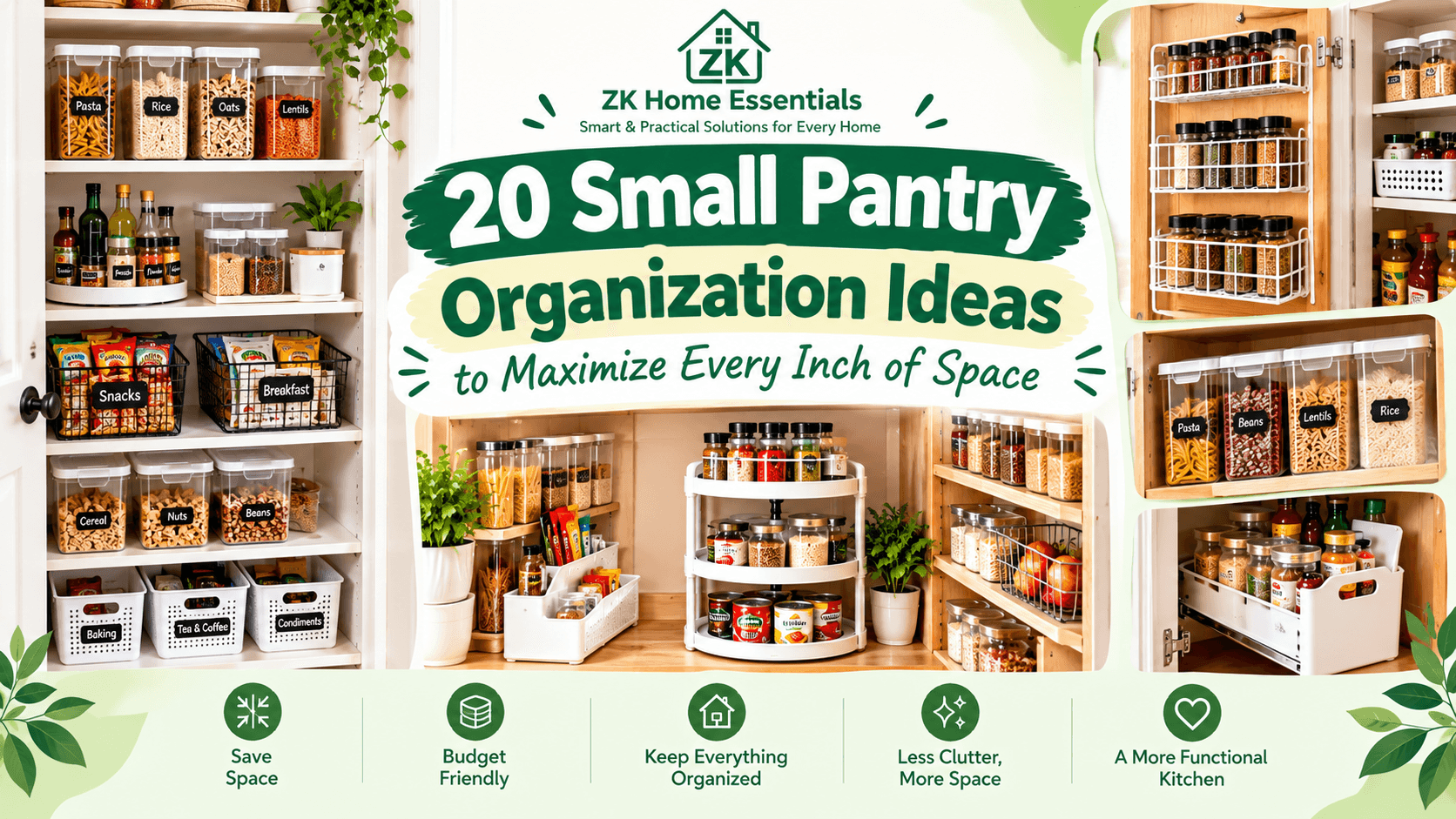
In this guide, we’ll share 20 practical small pantry organization ideas to help you reduce clutter, make food easier to find, maximize every inch of available space, and create a pantry that’s easier to maintain every day. Whether you have a narrow pantry, a small cabinet, or limited kitchen storage, these ideas can help you create a more functional and organized space.
1. Start by Decluttering Your Small Pantry
Before adding containers, bins, or organizers, start with a simple decluttering session. A small pantry has limited space, so keeping items you no longer use can quickly take up room that could be used more effectively.
Remove expired food, damaged packages, and items your household is unlikely to use. Then group similar products together—such as canned foods, snacks, breakfast items, baking supplies, pasta, and cooking ingredients. This makes it easier to see what you actually have and prevents unnecessary duplicate purchases.
Don’t try to organize everything immediately. Declutter first, then organize. Once unnecessary items are removed, you’ll have a much clearer idea of which shelves need more storage and which areas are already working well.
Quick decluttering checklist
- Check expiration dates
- Remove empty or nearly empty packages
- Group similar foods together
- Set aside duplicate items
- Keep frequently used foods easy to reach
- Move rarely used items to less accessible areas
A well-organized small pantry isn’t about fitting the maximum number of items into every shelf. It’s about making the space easy to see, easy to access, and easy to maintain. Current small-pantry guidance also emphasizes measuring and assessing the space before buying organizers, rather than starting with storage products.
2. Measure Your Pantry Before Buying Organizers
A storage product can look perfect online but be completely impractical if it doesn’t fit your pantry.
Measure:
- Shelf width
- Shelf depth
- Space between shelves
- Door clearance
- Available corners
- Height above existing items
Pay particular attention to the pantry door. An over-the-door organizer can be useful, but only if there’s enough clearance for the door to close properly.
Simple rule: Measure first, then shop for organizers.
This prevents wasted money and helps you choose storage solutions that actually make your pantry more functional.
3. Create Simple Pantry Zones
Instead of placing food wherever there’s an empty spot, divide your pantry into simple zones.
For example:
- Breakfast zone: cereal, oats, pancake mix
- Snack zone: crackers, cookies, chips
- Baking zone: flour, sugar, baking powder
- Cooking zone: pasta, rice, sauces
- Canned-food zone: beans, vegetables, soups
- Backstock zone: unopened extras
Organizing according to how you use your kitchen makes items easier to find and easier to put away.For more practical ideas, see our guide to kitchen organization ideas.
You don’t need dozens of categories. A few simple zones are easier to maintain than an overly complicated system. Current pantry-organization approaches similarly recommend organizing around routines and food categories.
4. Use Clear Containers for Frequently Used Dry Foods
Clear containers can make a small pantry easier to scan because you can see the contents without opening every package.
They’re particularly useful for suitable dry goods such as:
- Rice
- Pasta
- Flour
- Sugar
- Cereal
- Oats
- Beans
- Grains
Choose containers that fit your shelves rather than buying a large matching set first.
Important: Only transfer foods into containers that are appropriate for that food and keep the original product information or expiration details available when needed.
The goal isn’t simply to make the pantry look attractive. It’s to make inventory easier to see and access.
5. Add Shelf Risers to Use Vertical Space
One of the easiest ways to increase usable pantry storage is to use the empty space above shorter items.
A shelf riser creates a second level on an existing shelf. You can place smaller cans, jars, or containers on top while keeping other items underneath.
This works particularly well when you have:
- Short shelves with unused height
- Canned foods
- Small jars
- Spice containers
- Short food packages
Instead of spreading everything across the shelf, you’re making better use of the vertical space you already have. Shelf risers and tiered storage remain common recommendations for small pantry layouts.For more ways to make the most of limited kitchen space, check out our guide to small kitchen storage ideas.
6. Use Stackable Bins
Stackable bins are useful when shelf space is limited but there is unused vertical clearance.
Use separate bins for categories such as snacks, breakfast items, packets, or baking supplies.
Instead of creating one large pile, each bin gives a group of products a defined home.
Look for bins that are:
- Easy to lift
- Easy to clean
- Appropriately sized
- Stable when stacked
- Easy to access
Tip: Don’t stack bins so high that you have to remove several containers just to reach the bottom one.
7. Make Deep Shelves Easier to Reach
Deep shelves can create one of the biggest problems in a small pantry: items disappear at the back.
Instead of pushing everything toward the back, use storage that makes those items easier to access.
Depending on your pantry, you could use:
- Pull-out baskets
- Sliding organizers
- Turntables
- Handled bins
A pull-out container allows you to bring items forward instead of reaching blindly into the back of the shelf. Turntables can be particularly useful for bottles, sauces, and other small items that are difficult to reach.
8. Make Use of the Pantry Door
Don’t overlook the back of the pantry door.
If there is enough clearance, the door can provide additional storage without taking away shelf space.
Depending on the organizer, you can store:
- Spices
- Small snack packets
- Seasoning packets
- Wraps
- Foil
- Small bottles
However, measure the clearance before installing anything. The organizer should not interfere with shelves or prevent the door from closing.If you’re looking for more ways to maximize storage in your kitchen, explore our guide to kitchen cabinet organization ideas.
9. Organize Canned Foods With Tiered Storage
Canned foods are easy to stack—but stacked cans can quickly hide the labels of the cans behind them.
A tiered can organizer solves this by creating different levels so you can see more labels at once.
Group cans by type, such as:
- Vegetables
- Beans
- Soups
- Tomatoes
- Fruit
- Sauces
This makes it much easier to check what you have before buying more.
Bonus: Keep frequently used cans toward the front and less frequently used items farther back.
10. Create a Dedicated Snack Zone
Snacks can quickly make a small pantry look chaotic because individual packets and boxes come in different sizes.
Give snacks their own section using a small basket or bin.
You can group:
- Crackers
- Granola bars
- Cookies
- Chips
- Nuts
- Individual snack packs
A dedicated snack zone also makes it easier for family members to find what they want without searching through the entire pantry.
For households with children, placing appropriate everyday snacks on a lower shelf can make them easier to reach independently.
11. Give Baking Supplies Their Own Zone
Flour, sugar, baking powder, sprinkles, chocolate chips, and other baking ingredients can quickly become scattered across different shelves.
Create one dedicated baking zone.
Keep commonly used ingredients together and use appropriately sized containers or bins to prevent small packages from spreading across the shelf.
You can also keep:
- Measuring cups
- Decorating supplies
- Baking mixes
- Parchment paper
nearby if your pantry has enough space.
The goal is to create a small baking station rather than making you search multiple shelves whenever you want to bake.
12. Keep Everyday Items at Eye Level
Not everything in your pantry needs to be equally accessible.
Place the foods you use most often at comfortable eye or hand level.
For example:
Eye level: cereal, coffee, snacks, everyday cooking ingredients
Lower shelves: heavier items, larger containers
Upper shelves: occasional-use or backup products
This simple arrangement reduces unnecessary reaching and makes your daily routine faster.
A useful principle is:
The more frequently you use something, the easier it should be to reach.
13. Use Narrow Bins for Small or Loose Packages
Small packets can quickly become one of the biggest sources of pantry clutter.
Instead of letting them spread across a shelf, place similar items inside narrow bins.
Good candidates include:
- Seasoning packets
- Gravy mixes
- Snack bars
- Sauce packets
- Small baking ingredients
- Tea packets
Narrow bins are particularly useful because they create defined sections without consuming an entire shelf.
They also make it easier to pull out a whole category at once.If you’re working with a small kitchen, you can find more practical ways to create storage space in our guide to affordable kitchen storage solutions for small spaces.
14. Label Your Pantry Containers and Bins
Labels can make an organization system easier for everyone in the household to follow.
You can label containers or bins with simple names such as:
- Snacks
- Baking
- Breakfast
- Pasta & Rice
- Canned Foods
- Backstock
Don’t over-label everything. The purpose is to make categories obvious, not turn your pantry into a complicated filing system.
If you frequently change the contents of a bin, consider removable labels so the system can adapt over time.
15. Use Upper Shelves for Less-Used Items
Upper shelves are often harder to reach, so they’re better suited to products you don’t need every day.
Consider storing:
- Extra baking supplies
- Seasonal foods
- Specialty ingredients
- Backup products
- Infrequently used kitchen items
Keep a small step stool nearby if necessary, and avoid putting heavy items where they’re difficult or unsafe to retrieve.
This frees the most accessible shelves for the products you actually use every day.
16. Keep Heavy Items on Lower Shelves
Heavy products are generally easier to handle when they’re stored lower down.
Examples include:
- Large bags of rice
- Bulk flour
- Large bottles
- Heavy cans
- Bulk food packages
Keeping heavier items on lower shelves can also make the pantry easier and more comfortable to use.
For particularly bulky products, consider placing them in a sturdy bin or basket so you can move several related items together instead of handling each item individually.For more ideas on making the most of limited kitchen storage, take a look at our guide to under-sink organization ideas.
17. Create a Small Backstock Area
Buying extra food can be useful, but storing duplicates throughout the pantry makes it difficult to know what you already own.
Create one clearly defined backstock zone.
Put unopened extras there rather than mixing them with the products you’re currently using.
For example:
Everyday pasta → Cooking zone
Extra pasta → Backstock zone
This creates a simple visual system and can help prevent accidental duplicate purchases.
A dedicated backstock bin is also recommended in recent small/deep pantry systems because it keeps extra purchases contained rather than allowing them to spread across shelves.
18. Use a First-In, First-Out System
When you buy another package of the same food, don’t automatically place it in front of the older one.
Instead, move the older product toward the front and put the newer product behind it.
This is commonly known as FIFO—First In, First Out.
It’s particularly useful for:
- Canned foods
- Pasta
- Rice
- Cereals
- Baking ingredients
- Packaged foods
The idea is simple: use older products first and keep newer purchases behind them.
This can also make pantry checks easier because you’re less likely to overlook older items hidden at the back.
19. Leave Some Empty Space
It can be tempting to fill every shelf and corner when you have a small pantry.
But completely packed shelves can actually make the space harder to use.
Leave enough room to:
- See product labels
- Remove containers
- Add new groceries
- Move items around
- Clean the shelves
A little empty space gives you flexibility.
The goal isn’t to fit the maximum number of products. The goal is to make the maximum amount of storage usable.
20. Create a Simple Weekly Pantry Reset
Even the best organization system will eventually become messy if nothing maintains it.
Once a week, spend a few minutes resetting your pantry.
Quick pantry reset:
- Return misplaced items to their zones.
- Move older products toward the front.
- Check for empty packages.
- Combine suitable duplicate items when practical.
- Wipe visible spills.
- Check your backstock.
- Make a shopping list based on what you actually need.
You don’t need to completely reorganize your pantry every week.
A 5–10 minute reset can help prevent small messes from becoming a major organization project.
How to Keep Your Small Pantry Organized Long-Term
The key to successful small pantry organization isn’t buying more storage products. It’s creating a system that matches how you actually use your kitchen.
Keep similar foods together, make frequently used items easy to reach, use vertical space wisely, and avoid allowing backstock to spread throughout the pantry.
Most importantly, don’t try to copy another person’s pantry exactly. A system that works beautifully in a large walk-in pantry may not work in a narrow cabinet. Current guidance increasingly emphasizes choosing storage based on the actual space and access problems rather than simply buying more containers.
A small pantry can be highly functional when every shelf, corner, and storage zone has a clear purpose.
Best Storage Products for Small Pantry Organization
The right storage products can make a small pantry easier to use, but you don’t need to buy every type of organizer. Focus on products that solve a specific problem, such as wasted vertical space, difficult-to-reach shelves, or loose packages.
1. Stackable Storage Containers
Clear, stackable containers can help organize suitable dry foods while making the contents easier to see. Choose sizes that fit your shelves and leave enough room to remove them comfortably.
Best for: Pasta, rice, cereal, oats, flour and other suitable dry foods.
2. Shelf Risers
Shelf risers create an additional level on an existing shelf, helping you use vertical space more efficiently.
Best for: Cans, jars, spices and shorter packages.
3. Pull-Out Bins
Pull-out bins are useful for deep shelves where products at the back are difficult to reach. Instead of reaching behind several items, you can pull the bin forward.
Best for: Snacks, packets, sauces and backstock.
4. Turntable Organizers
A turntable can make bottles, jars and frequently used ingredients easier to access, particularly when they’re stored toward the back of a shelf.
Best for: Sauces, condiments, oils and jars.
5. Narrow Pantry Bins
Narrow bins can prevent small packets and loose packages from spreading across the shelf.
Best for: Seasoning packets, snack bars, tea packets and small food packages.
6. Pantry Labels
Simple labels help everyone know where items belong and make it easier to return products to the correct zone.
Best for: Snack bins, baking supplies, breakfast items, canned foods and backstock.
💡 Choose Storage Based on the Problem
Don’t start by asking, “Which organizer should I buy?”
Instead ask:
“What is making my pantry difficult to use?”
If the problem is unused vertical space, try shelf risers or stackable containers.
If the problem is deep shelves, consider pull-out bins or turntables.
If the problem is small loose packages, narrow bins can help.
If the problem is items constantly being misplaced, labels and defined pantry zones may be the better solution.
This problem-solving approach helps you avoid filling a small pantry with unnecessary organizers and keeps your storage system practical.
Final Thoughts
A small pantry can be much more functional with a few simple changes. Start by decluttering, group similar items together, and make use of vertical, door, and shelf space that might otherwise go unused.
You don’t need an expensive makeover to create a more organized pantry. The right combination of small pantry organization ideas, practical storage solutions, and a simple weekly reset can make everyday items easier to find while keeping clutter under control.
Most importantly, organize your pantry around the way your household actually uses it. Keep frequently used foods within easy reach, store less-used items higher up, and leave some open space so the pantry remains easy to maintain.
With a little planning, even the smallest pantry can become a cleaner, more accessible, and more efficient part of your kitchen.
Frequently Asked Questions About Small Pantry Organization
1. How do I organize a small pantry with limited space?
Start by removing expired or unused items, then group similar foods into simple zones. Use vertical space with shelf risers, stackable containers, and narrow bins. Keep frequently used items at eye level and less-used products on higher shelves.
2. What is the best way to maximize a small pantry?
The best approach is to use vertical and hidden space efficiently. Shelf risers, stackable bins, door organizers, and narrow storage containers can help you use space that would otherwise go unused.
3. How do I organize a small pantry without spending a lot of money?
You don’t need expensive organizers. Start by decluttering and rearranging what you already have. Then add only the storage products that solve specific problems, such as shelf risers for vertical space or narrow bins for small packages.
4. How should I organize food in a small pantry?
Group food by category, such as snacks, baking supplies, canned foods, breakfast items, and everyday staples. Keep frequently used foods within easy reach and use a first-in, first-out system so older products are used before newer ones.
5. How can I keep a small pantry organized long-term?
Give your pantry a quick reset once a week. Return items to their designated zones, check for empty packages, move older products toward the front, and avoid overfilling shelves. Leaving a little empty space makes it much easier to maintain organization.
Affiliate Disclosure: ZK Home Essentials may earn a small commission when you purchase products through affiliate links on this website. This comes at no additional cost to you. We only recommend products and storage solutions that we believe may be useful for your home and everyday needs. Our goal is to provide helpful ideas and practical product suggestions to make organizing your home easier.