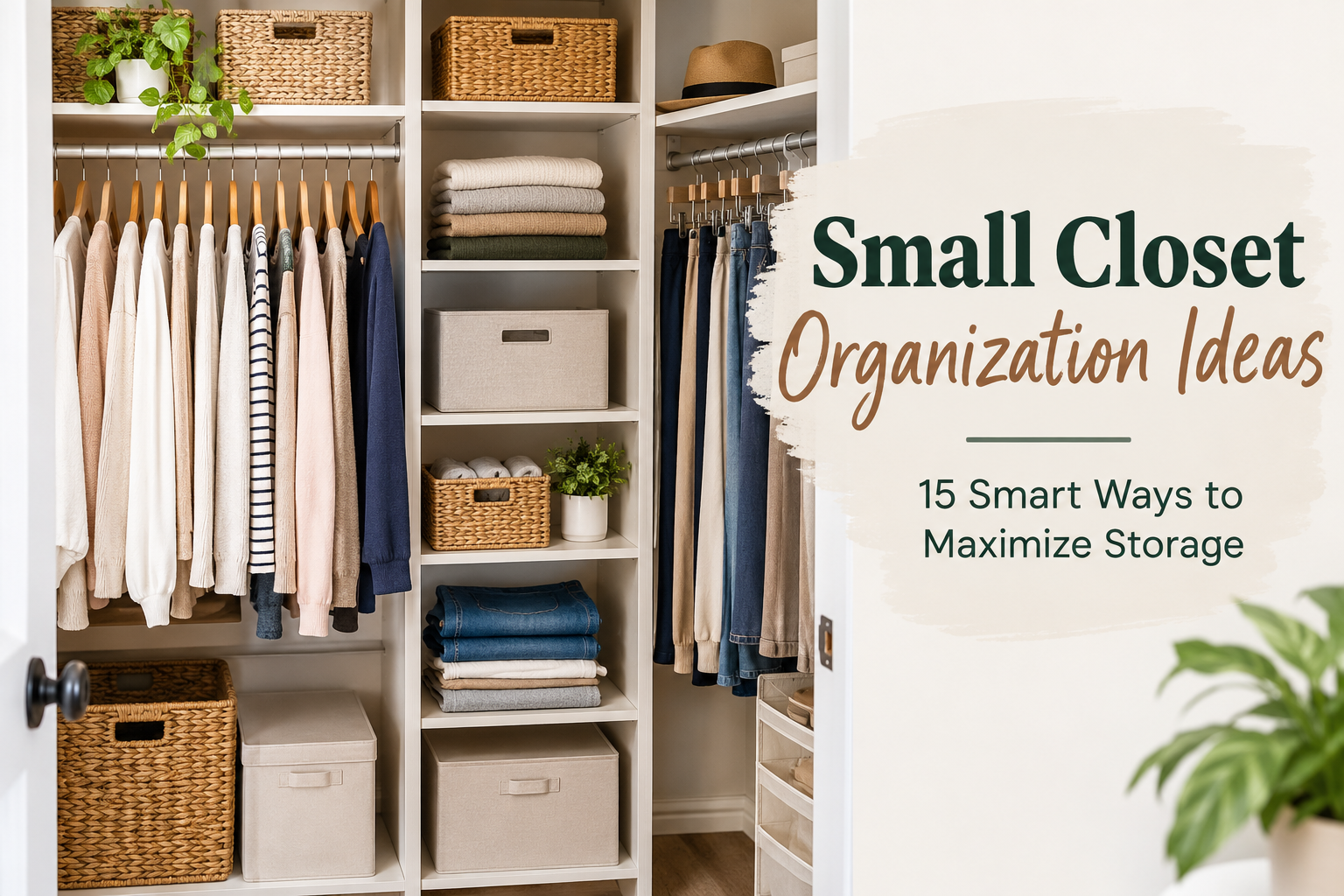
A small closet can become crowded quickly when clothes, shoes, bags, and seasonal items all compete for the same limited space. Finding your favorite shirt may mean moving several hangers, while accessories disappear into drawers and rarely used belongings take over the shelves.
The good news is that you don’t necessarily need a bigger closet to create a more functional storage system. With a few thoughtful changes, small closet organization can help you use the space you already have, find everyday essentials more easily, and keep clothing and accessories in order.
Whether you have a compact bedroom closet, a small reach-in wardrobe, or a rental closet you cannot remodel, these 15 practical ideas can help you make better use of your available space. Start with simple changes you can make for free, then consider storage products only where they solve a specific problem.
How to Organize a Small Closet Before Buying Anything
Before adding shelves, baskets, or hangers, take a little time to understand what you own and how you use your closet.
- Remove items you no longer need. Set aside clothing that no longer fits, items you never wear, and damaged pieces you do not plan to repair.
- Group similar belongings together. Make separate groups for tops, pants, dresses, shoes, bags, accessories, and seasonal clothing.
- Measure the available space. Check the closet’s width, depth, shelf height, and hanging-rod space before purchasing organizers.
- Identify your biggest problem. Decide whether you need more hanging room, better folded-clothing storage, easier access to accessories, or a place for seasonal items.
- Plan the layout around your routine. Keep frequently worn clothing at a convenient height and move occasional-use items to less accessible areas.
This preparation helps you avoid buying organizers that do not fit or that simply add more things to an already crowded closet.
For more ways to make the most of limited space, explore our guide to small bedroom organization ideas.
15 Small Closet Organization Ideas to Maximize Storage
1. Declutter Before Rearranging
The simplest way to create more usable closet space is to reduce the number of items competing for it. Rearranging clothing you no longer wear may make the closet look neater temporarily, but it does not address the underlying problem.
Take everything out of one section at a time and sort it into four groups: keep, donate, repair, and discard. Be realistic about clothing that no longer fits your lifestyle or needs repairs you are unlikely to make.
For items you decide to donate, check the receiving organization’s guidelines. Keep sentimental or special-occasion clothing if it matters to you; the goal is to remove unnecessary clutter, not to own as little as possible.
Space-saving tip: Finish one section before moving to the next. This makes the project more manageable and keeps your bedroom from becoming overwhelmed with piles of clothing.
2. Switch to Slim, Space-Saving Hangers
Bulky hangers can occupy more rod space than necessary, especially when most of your wardrobe consists of shirts, blouses, and lightweight tops.
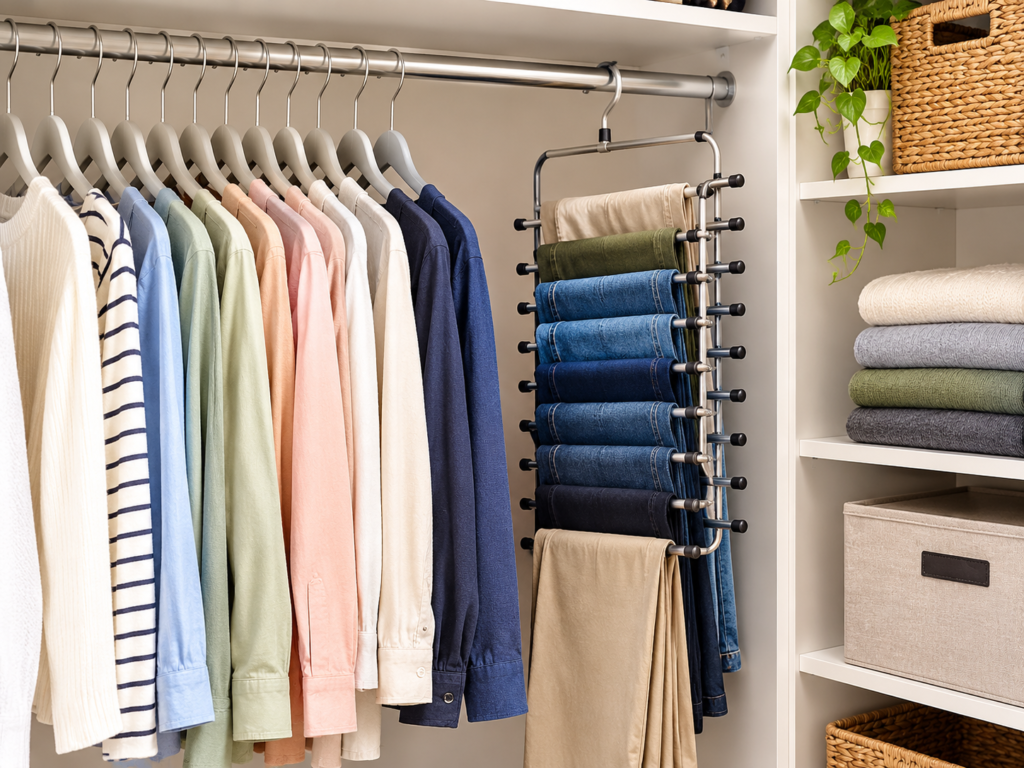
Slim hangers may allow more garments to fit along the same rod, depending on the thickness of your existing hangers and the size of your clothing. Non-slip designs can also help suitable garments stay in place.
Consider using a consistent hanger style for everyday clothing and reserving sturdy hangers for heavier coats or structured garments.
If you need a replacement option, explore these space-saving clothes hangers with a slim, non-slip design. Check the product listing for dimensions, material details, and suitability for your garments before ordering.
Space-saving tip: Do not pack clothing so tightly that you cannot slide hangers along the rod. Easy access is just as important as fitting more items into the closet.
3. Use Multi-Layer Hangers for Pants
Pants, jeans, and similar garments can occupy considerable rod space when each item hangs separately. A multi-layer pants hanger can arrange several suitable garments vertically instead of spreading them across the rod.
This approach may be especially useful when you have limited horizontal hanging space but enough vertical clearance for the hanger.
A space-saving multi-layer pants hanger is one option to consider. Check how many garments it is designed to hold, its dimensions, and how it opens or releases clothing before purchasing.
You can also use existing hangers to group trousers by type, such as work pants, jeans, and casual wear.
Space-saving tip: Keep frequently worn pants easy to reach. A hanger that is difficult to operate may not be the best choice for items you use every day.
4. Make Better Use of Vertical Space
Many closets have unused space above hanging clothes or between the top shelf and the ceiling. Using these areas for suitable items can help free up more accessible storage space.
Depending on your closet layout, consider:
- Placing labeled bins on a high shelf.
- Using a hanging shelf organizer if there is sufficient clearance.
- Storing lightweight, less frequently used items above everyday clothing.
- Grouping similar belongings vertically rather than spreading them across multiple shelves.
Before adding anything, check that shelves can safely support the intended weight and that stored items will not fall when you reach for them. Avoid stacking heavy belongings overhead.
Space-saving tip: Keep everyday items within easy reach and reserve higher shelves for belongings you use occasionally.
5. Organize Folded Clothing with Drawer Dividers
Underwear, socks, belts, scarves, and other small items can become mixed together in drawers. Drawer dividers create separate sections so each category has a designated place.
You do not need to buy a large organizing system. Start by measuring one drawer and deciding which categories need separate compartments. Adjustable or individual organizers may work well when drawer dimensions vary.
For a ready-made option, explore these 10-piece drawer organizer storage boxes. Confirm the dimensions and included pieces on the product page to determine whether the set suits your drawers.
Fold small clothing items in a way that lets you see them without removing everything on top. Return each item to its assigned compartment after laundry day.
Space-saving tip: If your closet has no drawers, small boxes or baskets on a shelf may provide a similar way to separate accessories.
6. Store Seasonal Clothing Separately
Heavy winter sweaters, coats, and cold-weather accessories may not need to occupy your most accessible storage space during warmer months. Likewise, summer clothing can be moved out of the way when temperatures drop.
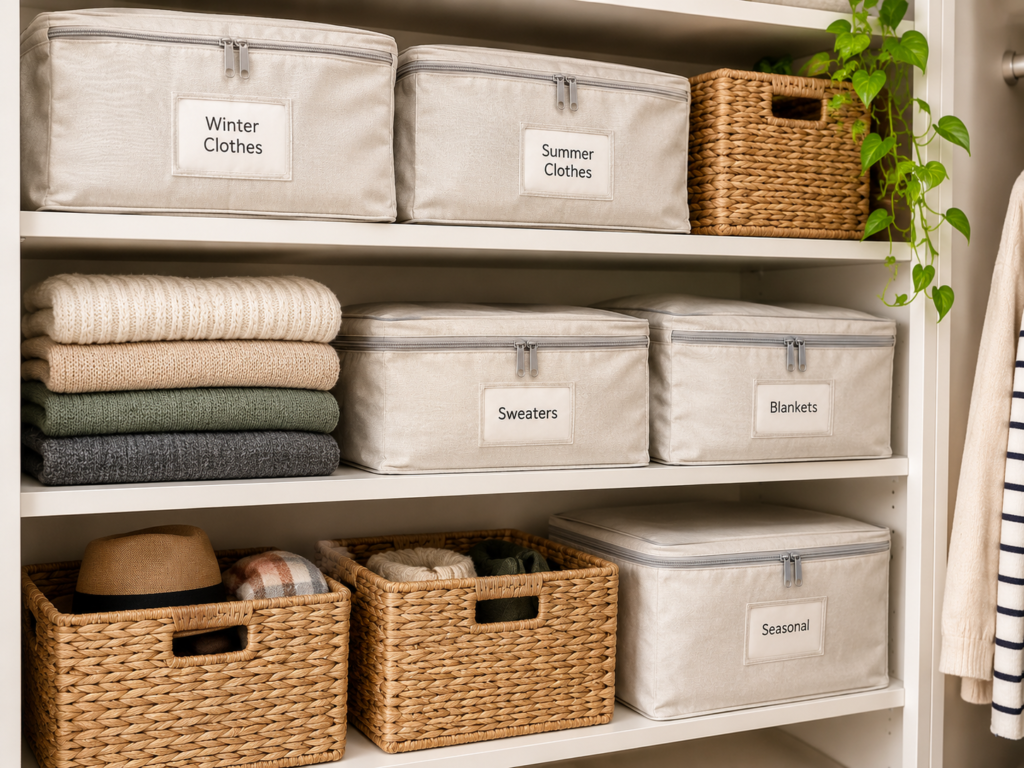
Wash or clean garments according to their care labels and allow them to dry completely before storing them. Place seasonal items in suitable storage bags or containers, label them clearly, and keep them in a closet’s upper shelf or another appropriate storage area.
A large-capacity storage bag may be worth considering for suitable clothing or soft belongings. Review its actual dimensions, closure, and material information before deciding what to store in it.
Space-saving tip: Label bags by season and contents, such as “Winter Sweaters” or “Summer Clothes,” so you can locate what you need without opening every container.
You can also use these space-saving habits in your laundry area with our small laundry room organization ideas.
7. Use Compression Storage for Bulky Soft Items
Comforters, spare blankets, and bulky seasonal clothing can take up a large amount of space when stored loosely. Compression storage bags are designed to reduce the volume of suitable soft items, although the amount of space saved depends on the contents and the bag’s design.
Before using one, check whether the manufacturer’s instructions permit the items you intend to store. Some delicate or structured garments may not be appropriate for compression, and items should be clean and completely dry before storage.
You can explore this self-compression storage bag for comforters and clothing. Verify the product’s size, compression method, and care instructions on its listing before ordering.
Avoid compressing items in a way that may damage their filling or structure. Leave enough room to store the bag safely without blocking access to everyday belongings.
Space-saving tip: Use compression storage for bulky items you do not need every day, rather than for clothing you frequently take out and put away.
8. Give Shoes a Dedicated Place
Shoes scattered across the closet floor make it harder to reach clothing and can hide pairs at the back. Assigning footwear a specific location helps keep the floor more usable.
Depending on your layout, you can:
- Arrange everyday shoes in a single accessible row.
- Place occasional-use footwear on a higher or lower shelf.
- Use a suitable shoe rack if floor space allows.
- Keep delicate or special-occasion footwear in appropriate boxes.
- Store shoes clean and dry before putting them away.
Avoid stacking footwear in a way that crushes or deforms it. If you have very little floor space, consider whether some pairs can be stored in another suitable location.
Space-saving tip: Keep the shoes you wear most often near the front and move seasonal or occasional pairs out of the main access area.
9. Organize Hats, Belts, and Small Accessories
Small accessories often get lost because they do not have a designated storage location. Hats may become crushed under other belongings, while belts and scarves can tangle together in a drawer.
Use a simple system based on the type of accessory:
- Store hats on a suitable shelf or designated holder.
- Roll or loosely fold scarves according to their fabric and storage needs.
- Hang belts on a compatible organizer or place them in separate compartments.
- Keep small accessories together in a labeled box or drawer section.
If you need a dedicated place for hats, you can review this closet hat organizer. Check the listing for the product’s actual design, installation requirements, and capacity before deciding whether it suits your closet.
Space-saving tip: Keep frequently used accessories together near the clothing you normally wear with them.
10. Use Storage Baskets to Group Loose Items
Open shelves can quickly become cluttered when they hold unrelated items. Baskets help group smaller belongings so the shelf is easier to maintain.
You might use one basket for scarves, another for handbags or accessories, and a separate container for items that belong elsewhere but need temporary storage.
A woven seagrass storage basket can be considered for suitable accessories or soft items. Check its dimensions and construction before deciding whether it fits the shelf and the items you plan to store.
Choose baskets that fit comfortably without blocking nearby clothing or making the shelf difficult to use. If you cannot see what is inside, labels can help you identify the contents quickly.
Looking for more ways to reduce clutter throughout your home? Read our small living room organization ideas guide next.
Space-saving tip: Avoid filling every available inch with containers. Leave enough room to remove a basket without disturbing the others.
11. Separate Clothes by Category
When workwear, casual clothing, exercise clothes, and special-occasion outfits are mixed together, finding a specific item can take longer than necessary.
Create simple zones on your hanging rod or shelves. For example, arrange everyday tops together, followed by workwear, pants, dresses, and occasional-use clothing. If you share a closet, you may prefer separate sections for each person.
Within each category, arrange items in a way that makes sense for your routine. Some people prefer color order; others find it easier to group clothing by garment type or frequency of use.
Space-saving tip: Keep your most frequently worn clothing in the easiest-to-reach section. Organization should support how you get dressed, not just how the closet looks.
12. Use the Inside of the Closet Door Carefully
The inside of a closet door may provide useful storage for lightweight accessories, depending on the door’s construction and the available clearance.
Possible options include compatible over-door hooks, a hanging organizer, or a designated accessory holder. Before installing anything, make sure the door can close fully and that the organizer will not catch on clothing or damage the door.
Check the organizer’s weight limits and installation instructions, and avoid hanging heavy items on hardware that is not designed to support them.
Space-saving tip: Use door storage for items you reach for often, such as belts, scarves, or lightweight bags. Keep the area clear enough for the door to open and close smoothly.
13. Store Bags Without Crushing Them
Handbags, backpacks, and tote bags can occupy valuable shelf space, particularly when they are stacked on top of each other. Give each bag a practical place based on its shape, weight, and frequency of use.
You can stand suitable bags upright, nest soft bags inside one another, or place smaller bags in a larger one when doing so will not distort their shape. Use gentle stuffing or other appropriate support for bags that need to retain their structure.
Avoid hanging heavy bags from unsuitable straps or hooks, since this can stretch or damage them over time.
Space-saving tip: Keep daily-use bags near the front and store occasional-use bags on a higher shelf or in a labeled container.
14. Make the Closet Floor Work for You
The floor often becomes a temporary dumping area for shoes, laundry, and storage bags. Giving it a defined purpose can make the entire closet easier to use.
Start by removing anything that does not belong there. Then decide what should occupy the floor based on the closet’s available height and depth.
Suitable options might include a compact shoe rack, one laundry hamper, or a low container for items you use occasionally. Leave enough space to stand comfortably and retrieve clothing without moving several objects first.
Do not block ventilation or access to electrical outlets, and avoid placing containers where they prevent doors from opening fully.
Space-saving tip: If the floor is too crowded, move seasonal belongings to an appropriate upper shelf or another storage location instead of adding another container.
15. Maintain the System with a Simple Weekly Reset
Even a well-organized closet can become cluttered again when clothing is returned to the wrong place or accessories accumulate on shelves.
A short weekly reset helps you catch small problems before they become a large project.
Try this routine:
- Return clean clothing to its designated section.
- Put shoes and accessories back in their assigned places.
- Move items that do not belong in the closet to their proper locations.
- Check whether any shelf or drawer has become overcrowded.
- Set aside clothing that needs repair, cleaning, or donation.
You can also review seasonal storage when the weather changes or your wardrobe needs shift.
Space-saving tip: Keep the system simple enough that everyone who uses the closet can maintain it. A practical arrangement is more useful than an elaborate one that is difficult to keep up.
Affordable Small Closet Organization Ideas
You can improve a small closet without purchasing a complete organizing system. Start with the supplies you already have and spend money only where a specific problem remains.
| Budget-friendly idea | What it helps with | Before spending money |
|---|---|---|
| Declutter and donate unused items | Reduces the number of belongings competing for space | Check clothing carefully and set aside items you genuinely use |
| Group clothes by category | Makes everyday items easier to locate | Use the existing rod and shelves first |
| Repurpose suitable boxes | Separates accessories and small items | Make sure boxes are clean, sturdy, and the right size |
| Rotate seasonal clothing | Frees accessible space for current needs | Store items clean and completely dry |
| Use existing slim hangers | Reduces unnecessary bulk where suitable | Compare hanger thickness and garment support |
| Add drawer compartments | Separates socks, underwear, and accessories | Measure drawers before choosing organizers |
| Label storage containers | Makes stored items easier to identify | Use simple labels and a consistent naming system |
A useful rule is to try the free or low-cost changes first. If the closet still has a specific problem, choose an organizer that addresses it instead of buying several products at once.
Common Small Closet Organization Mistakes to Avoid
Buying organizers before measuring
A basket that is too wide, a hanger that is too long, or a storage bag that will not fit on the shelf can make a small closet even harder to use. Measure the available space and compare it with the product dimensions before ordering.
Filling every inch of the closet
Using vertical space is helpful, but overfilling shelves and rods can make belongings difficult to retrieve. Leave room to slide hangers, remove baskets, and reach frequently used items safely.
Storing damp clothing or bedding
Clothing and textiles should be clean and completely dry before being placed in closed containers. Follow care instructions to help avoid unwanted odors and moisture problems.
Putting everyday items out of reach
If you need to move several containers every morning to reach your favorite clothes, the layout is not working well. Keep frequent-use items accessible and move occasional-use belongings to less convenient areas.
Choosing products without checking compatibility
Not every organizer fits every closet. Check dimensions, mounting requirements, weight limits, and intended use before buying. For rented homes, consider whether installation requires drilling or could damage the door or wall.
Frequently Asked Questions About Small Closet Organization
1. How do you organize a small closet with lots of clothes?
Begin by removing items you no longer wear and grouping the remaining clothing by type and frequency of use. Use suitable slim hangers, organize folded items in drawers or baskets, and move seasonal clothing to appropriate storage. Measure the closet before adding organizers.
2. How can I maximize closet space without remodeling?
Start by decluttering, using existing shelves effectively, and grouping similar items together. Slim hangers, multi-layer pants hangers, drawer organizers, and labeled storage containers may help, depending on your closet layout. You can also use suitable vertical space without making permanent changes.
3. What hangers are best for a small closet?
Slim hangers may help fit more garments on a rod than bulky hangers. Non-slip styles can be useful for clothing that tends to slide off, while sturdy hangers are better suited to heavier garments. Choose a hanger that supports the garment properly rather than focusing only on its thickness.
4. How should I store seasonal clothes in a small closet?
Clean and dry the clothing according to its care label, then place it in a suitable storage bag or container. Label the contents and keep the container in an appropriate upper shelf or alternate storage area. Check that the storage method is suitable for the fabric and garment type.
5. How do I organize a small closet on a budget?
Declutter first, group clothes by category, reuse suitable boxes, and make better use of existing shelves and hangers. Buy organizers only after identifying a specific storage problem and measuring the available space.
6. How can I keep my small closet organized long-term?
Return items to their designated places, keep frequently used clothing accessible, and perform a brief weekly reset. Review seasonal belongings periodically and avoid adding new storage products unless they solve a real problem.
7. Are closet organizers worth buying?
They can be useful when they solve a specific problem, such as limited hanging space or mixed-up drawer contents. However, they are not a substitute for decluttering or planning the layout. Measure your closet and compare product dimensions before purchasing.
Final Thoughts: Make Every Inch of Your Closet Count
A small closet can be practical and easy to maintain when each category of clothing and accessories has a clear place. Start by decluttering, make better use of vertical space, choose suitable hangers, and organize smaller belongings in drawers or baskets.
You do not need to buy every organizer you see. Try the simple changes first, then choose products that fit your actual storage needs.
For more practical ideas, explore our guides to small bedroom organization and small laundry room organization. They offer additional ways to make better use of limited space throughout your home.
Ready to create a more organized home? Explore the storage options at ZK Home Essentials and choose the solutions that work best for your closet.
Affiliate Disclosure
This article may contain affiliate links. If you purchase through these links, ZK Home Essentials may earn a commission at no additional cost to you. We aim to recommend products that are relevant to the topic and encourage readers to check product details, dimensions, compatibility, and current terms before purchasing.
For more information about affiliate disclosures and endorsements, see the FTC’s guidance on endorsements and affiliate relationships.