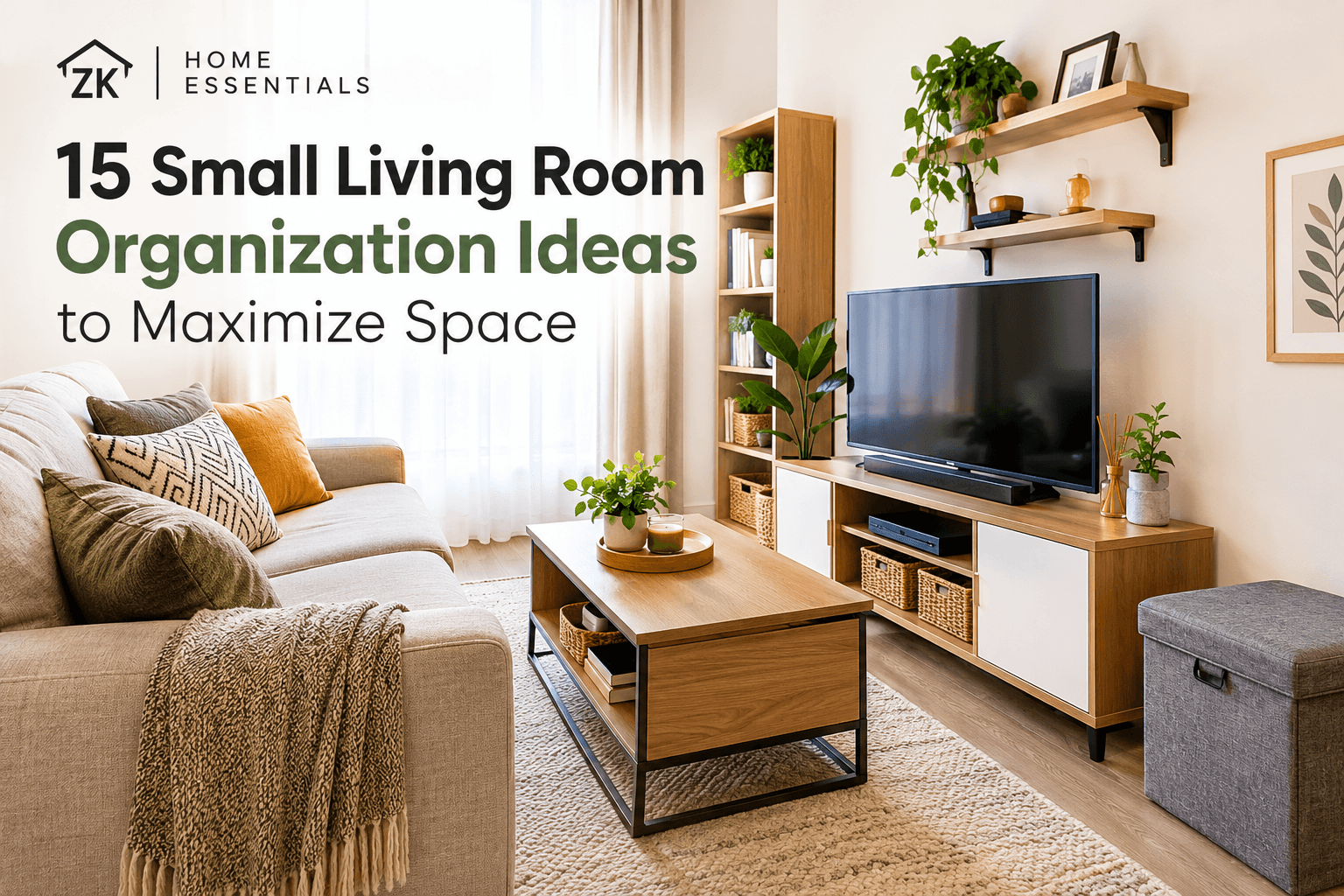
A small living room can quickly feel crowded when blankets cover the sofa, everyday items collect on the coffee table, and storage space seems limited. The good news is that you do not need a bigger home or an expensive renovation to create a more organized and comfortable living area.
With a few thoughtful changes, you can make better use of your existing furniture, find practical places for everyday belongings, and keep walkways clear. The key is to focus on solutions that fit your room and your daily routine instead of adding more storage products without a plan.
These 15 small living room organization ideas will help you reduce clutter, use available space more effectively, and create a living room that feels easier to maintain. Whether you live in a small apartment or simply have a compact living area, you can start with a few simple improvements and build from there.
Affiliate disclosure: This article may contain affiliate links. If you purchase through qualifying links, ZK Home Essentials may earn a commission at no additional cost to you.
Why Organizing a Small Living Room Matters
A small living room often serves several purposes. It may be a place to relax, watch television, entertain guests, work on a laptop, or spend time with family. When everything shares the same space, clutter can accumulate quickly.
Poor furniture placement can make the room harder to navigate, while oversized storage units may take up valuable floor space. Small items such as remote controls, charging cables, books, and blankets can also make the room look untidy when they do not have designated storage places.
An organized living room does not need to look empty or overly minimalist. Instead, it should allow you to find what you need, move around comfortably, and enjoy the space without constantly tidying up.
If you’re organizing several rooms in your home, explore these practical small bedroom organization ideas for more ways to reduce clutter and make better use of limited space.
The following ideas focus on practical changes that work with your existing room, furniture, and budget.
15 Small Living Room Organization Ideas to Maximize Space
1. Declutter Before Adding More Storage
Before purchasing baskets, shelves, or organizers, start by identifying what actually belongs in your living room. Adding storage without removing unnecessary items can simply give clutter more places to accumulate.
Begin with one area, such as the coffee table, television stand, or sofa. Remove anything that belongs in another room, recycle unwanted paper, and put away items you no longer use. Keep everyday essentials nearby and relocate occasional-use belongings to more suitable storage areas.
Try sorting items into three groups: keep, relocate, and donate or discard. Work in short sessions so the task feels manageable.
Why it works: Removing unnecessary belongings creates usable space without requiring additional furniture or spending money.
Practical tip: Spend five minutes each evening returning items to their designated places. A small daily reset can help prevent clutter from building up again.
2. Choose Furniture That Fits Your Room
Furniture that is too large can make a small living room feel cramped and leave little space for movement. Before buying anything new, measure the room and consider how people walk between the entrance, sofa, windows, and other important areas.
Choose furniture that suits the available floor space. A compact sofa, a smaller side table, or a narrow television stand may work better than oversized pieces. Furniture with visible legs can also create a more open visual effect because more of the floor remains visible.
Think about how you actually use the room. If you rarely entertain large groups, you may not need multiple bulky seating pieces.
Why it works: Appropriately sized furniture can improve circulation and make the room easier to use.
Practical tip: Use masking tape to outline the dimensions of a potential furniture purchase on the floor before ordering it. This gives you a better idea of how much space it will occupy.
3. Use a Coffee Table with Hidden Storage
Coffee tables often occupy a central position in the living room, so choosing one that offers useful storage can make that space work harder.
A lift-top table, a model with drawers, or a design with a lower shelf can provide a convenient place for items such as remotes, magazines, coasters, and small accessories. Keeping these belongings out of sight helps maintain a tidier surface.
If replacing your existing table is not practical, use a small tray to group frequently used items together. You can also place a suitable storage basket on a lower shelf to keep smaller belongings organized.
Why it works: Combining a useful surface with storage can reduce the need for separate organizers.
Practical tip: Store only the items you regularly use in the living room. Avoid turning hidden compartments into places where miscellaneous clutter accumulates.
4. Organize Blankets and Cushions in Storage Baskets
Extra blankets and cushions make a living room comfortable, but they can quickly cover seating areas or collect on the floor.
A storage basket placed beside the sofa can provide a designated home for throws, spare cushions, or other lightweight items. Choose a size that fits the available space without blocking a walkway. Woven baskets can complement many decorating styles, while fabric bins may be useful in casual spaces.
If you have a shelf or cabinet nearby, you may be able to store seasonal textiles there instead of keeping everything within reach.
Use baskets to group blankets, cushions, magazines, or other everyday items instead of leaving them scattered around the room. Choose a size that fits your available space and keeps frequently used items easy to reach. Explore storage baskets for a tidier living room
Why it works: Grouping similar belongings makes the room look more orderly and makes it easier to put things away.
Practical tip: Choose one basket for frequently used blankets rather than placing several containers around the room. This keeps storage simple and prevents the area from feeling crowded.
5. Make Better Use of Vertical Wall Space
When floor space is limited, look upward. Walls can provide useful storage without requiring another large piece of furniture.
Floating shelves, wall-mounted organizers, and appropriately secured shelving can hold books, small decorative objects, or lightweight everyday essentials. A vertical arrangement may also help you make use of an otherwise empty wall.
However, avoid filling every available section with shelves. Too many objects can make a compact room feel visually busy. Group similar items together and leave some open space between displays. Explore a decorative wall shelf for small spaces
Why it works: Vertical storage can free up surfaces and floor space when planned carefully.
Practical tip: Before installing shelves, check wall construction, weight limits, and suitable mounting hardware. Keep heavy objects securely supported and away from areas where they could fall onto people.
6. Add Slim Shelving to Unused Corners
Corners sometimes become places where miscellaneous belongings collect simply because they are out of the way. A narrow shelving unit or compact corner shelf can turn an underused area into purposeful storage.
Use it for books, small baskets, decorative pieces, or items that would otherwise occupy the coffee table. Measure the available width and depth first, and make sure the shelving does not interfere with doors, windows, or movement through the room.
If you rent your home, consider freestanding shelving when drilling into walls is not permitted.
Why it works: A well-chosen shelf can provide additional storage without occupying as much floor area as a wide cabinet.
Practical tip: Assign each shelf a purpose. For example, keep books together on one level and small accessories in a basket on another. This makes the unit easier to maintain.
7. Keep TV Accessories and Remotes Organized
Television areas can become cluttered with remote controls, streaming devices, headphones, game controllers, and other accessories. These small objects are easy to misplace and can make an otherwise tidy room look messy.
Start by removing accessories you no longer use. Place the remaining items in a small tray, drawer, or divided storage box near the television. If several people use the room, choose a location everyone can remember.
A compact remote holder may also help keep frequently used controls together instead of scattered across the sofa.
TV and air-conditioner remotes are easy to misplace when they have no designated spot. A wall-mounted remote holder can help keep them together and easier to find. Keep TV and AC remotes organized.
You can also explore these smart home essentials for practical products that can make everyday home routines more convenient.
Why it works: Giving small electronics and accessories a designated place reduces surface clutter and makes them easier to find.
Practical tip: Label compartments if you have several similar remotes or devices. Keep ventilation openings around electronic equipment clear and follow the manufacturer’s guidance for safe storage.
8. Manage Cables to Reduce Visual Clutter
Charging cables, television wires, and power cords can create visual clutter around entertainment units and side tables. Loose cables may also become tripping hazards when they cross walking areas.
First, identify which cables you actually need. Unplug and remove unused accessories, then group compatible cables using suitable cable ties, clips, or organizers. A cable management box may help conceal excess cable length around a suitable power strip.
For a desk or charging area within the living room, a desk-side cable organizer can keep charging leads accessible without allowing them to spread across the surface.
Loose cables around a TV or desk can make a small living room look untidy. A cable management rack installed in a suitable location can help group cables and keep them more organized. Check the product’s dimensions and mounting requirements before purchasing. Explore a cable management solution
Why it works: Better cable management makes electronics areas look neater and can help keep cords away from walkways.
Practical tip: Never overload a power strip, cover equipment that needs ventilation, or conceal damaged electrical cords. Keep cables and electrical connections away from moisture and follow the manufacturer’s safety instructions.
9. Use Storage Ottomans for Flexible Seating
A storage ottoman can serve several purposes in a compact living room. Depending on its design, it may function as a footrest, an extra seat, or a place to store blankets and other lightweight belongings.
This can be useful when you want occasional seating without introducing another large chair. Choose a model that fits the room and is easy to open. If you intend to use it as a seat, check the manufacturer’s stated weight capacity.
An ottoman should complement the existing layout rather than block a passage or make it difficult to reach the sofa.
Why it works: Combining storage with another function can reduce the need for separate furniture pieces.
Practical tip: Measure the space around the sofa before choosing an ottoman. Leave enough room for people to walk comfortably and use nearby furniture.
10. Keep Everyday Essentials on a Small Tray
Small items such as glasses, coasters, a notebook, or a television remote can make a coffee table look disorganized when they are scattered across its surface.
A simple tray creates a defined area for the items you want to keep nearby. Choose a size that leaves enough room for other activities, such as setting down a drink or using the table for a board game.
You can apply the same idea to a side table, placing a few everyday essentials together rather than allowing objects to spread across every available surface.
Why it works: Grouping small belongings creates a more organized appearance and makes tidying quicker.
Practical tip: Review the tray every few days. Return unnecessary items to their proper places so the tray remains useful instead of becoming another cluttered surface.
11. Create Defined Zones for Different Activities
A small living room may need to support several activities, but that does not mean you need separate rooms for each one.
Create simple zones based on how you use the space. The sofa and coffee table can form a relaxation area, while a small desk or side table may serve as a reading or laptop-work area. A basket near the sofa can hold books or other items associated with that activity.
You can define these zones through furniture placement, lighting, rugs, or storage rather than adding partitions that make the room feel smaller.
Why it works: Defined zones help belongings stay close to where they are used and make the room easier to organize.
Practical tip: Keep the main walkway clear between the entrance and the most frequently used parts of the room. Avoid arranging furniture solely for appearance if it makes everyday movement difficult.
12. Use Under-Sofa Space Carefully
Some sofas have enough clearance underneath to accommodate shallow storage containers. This space can be useful for belongings that you do not need every day, such as seasonal textiles or spare cushion covers.
Measure the clearance before purchasing containers and check whether the sofa’s construction allows safe access underneath. Choose storage that slides out easily and does not scratch the floor.
If the sofa sits close to the floor, do not force containers underneath it. A basket inside a cabinet or a suitable shelf may be a better alternative.
Why it works: Making use of existing, accessible space can provide storage without adding another visible furniture piece.
Practical tip: Label containers and store similar items together. Avoid keeping food, damp fabrics, or belongings that require frequent access underneath the sofa.
13. Organize Books and Decorative Items Selectively
Books, plants, photographs, and decorative objects can make a living room feel personal. The problem arises when too many items compete for limited shelf and tabletop space.
Choose the books and decorations you most enjoy displaying, then group them thoughtfully. Store or rotate less frequently used items rather than trying to show everything at once.
On shelves, leave some open space and vary the arrangement without overcrowding it. Keep delicate objects and heavy items positioned securely, especially if children or pets use the room.
Why it works: Selective displays allow the room to reflect your style without making every surface look full.
Practical tip: Try a simple review whenever you dust or rearrange the room. If an item no longer serves a purpose or adds something you value, consider storing it elsewhere.
14. Choose Wall-Mounted Lighting and Accessories
Floor lamps and side tables can be useful, but they also occupy space. Where suitable, wall-mounted lighting or compact wall organizers can free up some of that floor area.
A wall lamp beside a reading chair may provide light without needing a large floor lamp. Similarly, a wall-mounted organizer near an activity area can hold a few lightweight essentials.
Before installing any fixture, confirm that it is appropriate for the wall, room layout, and electrical setup. If permanent installation is unsuitable, choose a compact freestanding alternative.
Why it works: Moving selected functions onto the wall can leave more room for movement and furniture placement.
Practical tip: Keep lighting controls easy to reach and ensure cords do not cross walkways. Use professionally installed electrical fixtures when required.
15. Create a Simple Daily Reset Routine
Even a well-organized living room can become cluttered during a busy day. The easiest way to maintain your progress is to create a short routine that fits your household.
Before bed, return remote controls to their holder, fold blankets, place used cups in the kitchen, and put books or other belongings back where they belong. Straighten cushions and clear the main surfaces.
If several people share the room, give everyone a few simple responsibilities. Children can return toys to a suitable basket, while adults can handle electronics and other household items.
Why it works: Small, regular actions help prevent clutter from building up into a larger job.
Practical tip: Set aside five to ten minutes for a quick reset. The goal is not to make the room look perfect every evening, but to make tomorrow’s living space easier to use.
Budget-Friendly Ways to Organize a Small Living Room
You do not need to buy new furniture to improve a compact living room. Start by rearranging the pieces you already own and removing items that no longer belong in the space.
Reuse suitable boxes or baskets to group small belongings, repurpose a tray to organize a coffee table, and move occasional-use items to storage elsewhere in the home. If you have shelves already, rearrange their contents before purchasing more.
When you do need a new product, identify the specific problem first. A cable organizer may be useful for a cluttered television area, while a storage basket may help manage blankets beside the sofa. Choose products based on their dimensions, materials, capacity, and suitability for your room rather than buying them simply because they are advertised as space-saving.
You can also explore our guide to 10 smart home essentials that make everyday life easier for additional ideas for organizing everyday household accessories.
Small spaces often benefit from the same organizing principles. Discover these small kitchen storage ideas for inspiration on making the most of limited storage space.
The most budget-friendly approach is to make each purchase solve a real problem and avoid adding products that create more clutter than they remove.
Common Small Living Room Organization Mistakes to Avoid
A few common habits can make organizing a small living room harder than it needs to be.
- Buying storage before decluttering: More containers will not solve the problem if you are keeping items you no longer need.
- Choosing oversized furniture: Large pieces can reduce walking space and make the room harder to use.
- Overfilling shelves: Too many decorations and storage boxes can make walls look crowded.
- Blocking walkways: Keep entrances, doorways, and frequently used paths accessible.
- Hiding clutter instead of organizing it: Closed storage is useful, but belongings still need designated places.
- Ignoring daily habits: An elaborate system will not last if it is inconvenient to use.
Choose solutions that fit your room, your budget, and the way you live. A few well-planned changes are often easier to maintain than a complete room makeover.
Frequently Asked Questions
How can I organize a small living room on a budget?
Start by decluttering, rearranging existing furniture, and assigning belongings to specific places. Reuse suitable baskets or containers you already own, then purchase organizers only when you identify a genuine storage problem.
What furniture works best in a small living room?
Furniture that fits the room’s dimensions and leaves comfortable walking space is a good starting point. Compact tables, appropriately sized sofas, narrow shelving, and storage ottomans can be useful when their size and function suit your layout.
How can I add storage without making a small living room feel crowded?
Consider vertical shelving, storage furniture that serves more than one purpose, and baskets placed in areas that are already useful. Keep surfaces selective and avoid filling every wall or corner with storage.
How do I keep a small living room tidy every day?
Give frequently used items a designated home and create a short daily reset routine. Returning remote controls, blankets, books, and other belongings to their places can help prevent clutter from accumulating.
Final Thoughts
Organizing a small living room is about making your available space work better, not fitting as many storage products into it as possible. Start by decluttering, choosing furniture that fits, and giving everyday belongings a clear place to go.
The same decluttering approach can work in other rooms, too. Read these small bathroom organization ideas for ways to organize essentials in a compact space.
Then make improvements gradually, whether that means organizing cables, using a storage basket, or making better use of vertical space. You do not need to implement all 15 ideas at once. Choose the changes that solve your biggest problems first and build a simple routine to maintain them.
With thoughtful choices and consistent habits, even a compact living room can become more comfortable, functional, and easier to keep organized.