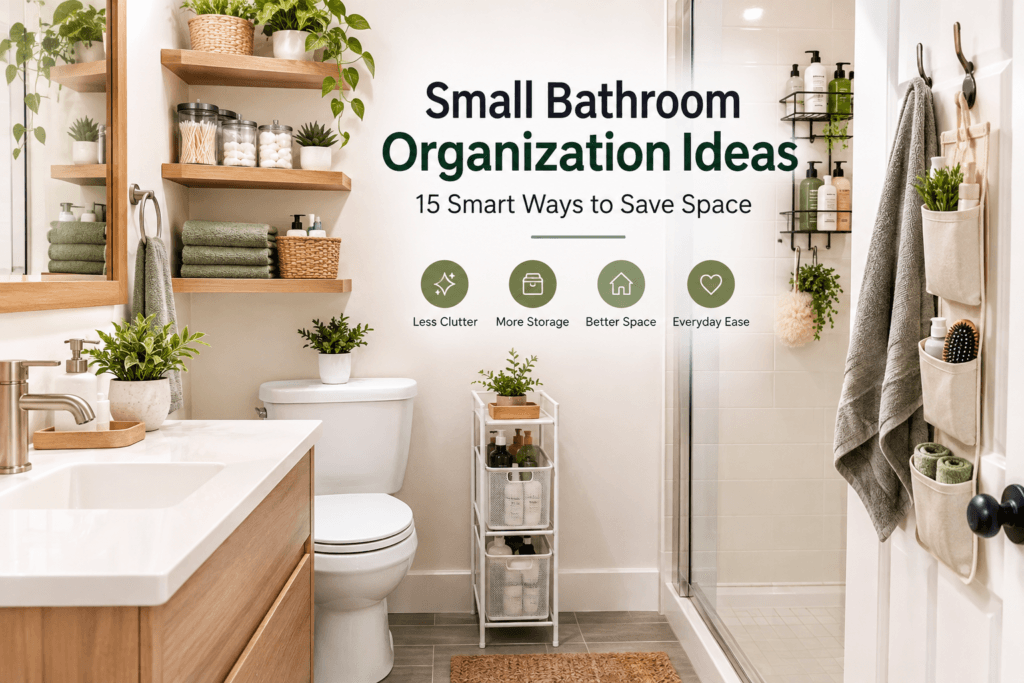

Under sink organization ideas can help turn a messy, wasted cabinet into useful storage. Cleaning supplies, sponges, trash bags, brushes, and bottles often end up piled together, making it difficult to find what you need.
The good news is that you don’t need a larger kitchen to create more storage. With a few simple under-sink organization ideas, you can make better use of this hidden space and keep everyday essentials easy to access.
1. Remove Everything and Start Fresh
Before organizing the area, take everything out from under the sink.
Check each item and remove anything that is empty, expired, damaged, or no longer needed. Group the remaining items by purpose, such as cleaning sprays, dishwashing supplies, sponges, and garbage bags.
Starting with an empty cabinet makes it much easier to see how much space you actually have.
2. Use Stackable Storage
The vertical space inside an under-sink cabinet is often wasted.
Small stackable shelves or organizers can create additional levels, allowing you to store more items without making the cabinet feel overcrowded.
Place frequently used products where they are easiest to reach and keep less-used items toward the back.
3. Add Small Bins for Better Organization
Small storage bins can prevent loose cleaning supplies from spreading throughout the cabinet.
Consider using separate bins for:
- Dishwashing supplies
- Cleaning sprays
- Sponges and brushes
- Extra trash bags
- Other household cleaning essentials
Grouping similar items together makes it much easier to find something quickly.
4. Make Use of the Cabinet Doors
The inside of the cabinet door can provide valuable extra storage.
Depending on your cabinet design, you can use suitable organizers or holders for lightweight items such as sponges, gloves, brushes, or small cleaning tools.
This keeps frequently used items within easy reach while freeing up shelf space.
5. Keep Cleaning Products Easy to Reach
Avoid placing the products you use every day at the very back of the cabinet.
Instead, organize your most frequently used items toward the front. Less frequently used products can go farther back.
This simple change can make your kitchen routine faster and reduce the frustration of searching through a crowded cabinet.
6. Don’t Ignore the Plumbing Space
Under-sink cabinets are different from ordinary cabinets because pipes and plumbing take up valuable room.
Choose flexible storage solutions that work around the pipes instead of trying to fill every available inch.
Adjustable or compact organizers can help you use the available space without blocking plumbing access.
7. Create a Simple Cleaning Station
Instead of keeping cleaning supplies scattered around the kitchen, turn the under-sink cabinet into a dedicated cleaning station.
Keep your most-used items together so you can quickly grab what you need for dishes, countertops, or everyday cleaning.
A dedicated area also makes it easier to notice when you’re running low on an essential product.
8. Use Vertical Space Before Adding More Clutter
When an under-sink cabinet feels full, the answer isn’t always to add more containers.
Look at the unused height first.
Using vertical organizers, stackable shelves, and compact bins can help you take advantage of space that would otherwise remain empty.
If you’re looking for more ways to make a small kitchen feel less crowded, see our guide to Small Kitchen Storage Ideas for additional practical solutions.
9. Keep the System Easy to Maintain
The best organization system is one that is easy to maintain.
After using a product, put it back in its designated area. Every few weeks, quickly check the cabinet and remove anything you no longer need.
A simple organization system is more useful than a complicated one that becomes messy again after a few days.
Final Thoughts
A messy under-sink cabinet can make a kitchen feel more cluttered than it really is. By removing unnecessary items, using vertical space, adding small bins, and keeping everyday products accessible, you can turn this overlooked area into useful storage.
These simple under-sink organization ideas can help you create a cleaner, more practical kitchen without needing a major renovation or expensive storage system.
Small changes can make everyday home organization much easier.
Frequently Asked Questions About Under Sink Organization
1. How do I organize the space under my kitchen sink?
Start by removing everything and grouping items such as cleaning sprays, sponges, brushes, trash bags, and extra supplies. Use baskets, bins, or stackable organizers to keep similar items together and make frequently used products easy to reach.
2. What should I store under the kitchen sink?
The space under the sink is ideal for cleaning supplies, sponges, brushes, trash bags, dishwasher supplies, and other household essentials. Avoid storing items that can be damaged by moisture or leaks.
3. How can I organize under the sink with plumbing in the way?
Choose storage solutions that work around the pipes, such as adjustable shelves, narrow baskets, pull-out organizers, or separate containers placed on either side of the plumbing. This helps you use more of the available space without blocking access to the pipes.
4. How do I maximize storage under the sink?
Make use of both the floor and vertical space. Stackable bins, tiered shelves, pull-out drawers, and door-mounted organizers can help you use otherwise wasted space while keeping everything visible and accessible.
5. How do I keep the area under my sink from becoming cluttered?
Keep only the supplies you regularly use and group similar products together. Labeling containers and checking the cabinet regularly can also prevent duplicate or unnecessary items from building up.
6. What is the best way to organize cleaning supplies under the sink?
Separate cleaning products by type and place the items you use most often toward the front. Small baskets or bins can keep bottles, sponges, brushes, and cloths organized and easier to find.
7. How often should I clean and reorganize under the sink?
A quick check every few weeks can help you remove empty containers, expired products, leaks, or items that no longer belong there. A deeper clean every few months can keep the space fresh and organized.